
Albanian Independence Day
28 Nëntor

Depending on where you live, you may or may not have seen an increase in the adored red flag with a black double headed eagle around your neighborhood and city. Today, November 28th, Albanians around the world celebrate our Independence Day and our Flag Day. This holiday, interchangeably called Dita e Pavarësisë and Dita e Flamurit, celebrates multiple accomplishments by Albanians throughout our history, and is recognized by Albanians in Albania, Kosova, Montenegro, North Macedonia, and Greece.
The earliest event took place on 28 November 1443, which celebrates the reclaiming of the Albanian city of Krujë by Albanian military leader, Gjergj Kastrioti Skenderbeu. Skenderbeu, who lived from 1405 to 1468, witnessed the Ottoman Empire’s earliest rise to power. Skenderbeu’s father had already converted to Islam for political and safety reasons, so all of his children remained Muslim until that day in November 1443.
It should go without saying that religion across the board during this time mainly served as a political weapon, and the Ottoman Empire was certainly no exception. Skenderbeu’s family, though unwillingly converted to Islam, was aware of the political benefits that conversion would deliver to them. Skenderbeu’s father sent him to the Sultan at a young age to receive military training, and Skenderbeu quickly rose up the ranks in the Ottoman forces. The trust that he earned eventually granted him control of some Albanian vilayets and a position as governor within the Ottoman Empire.
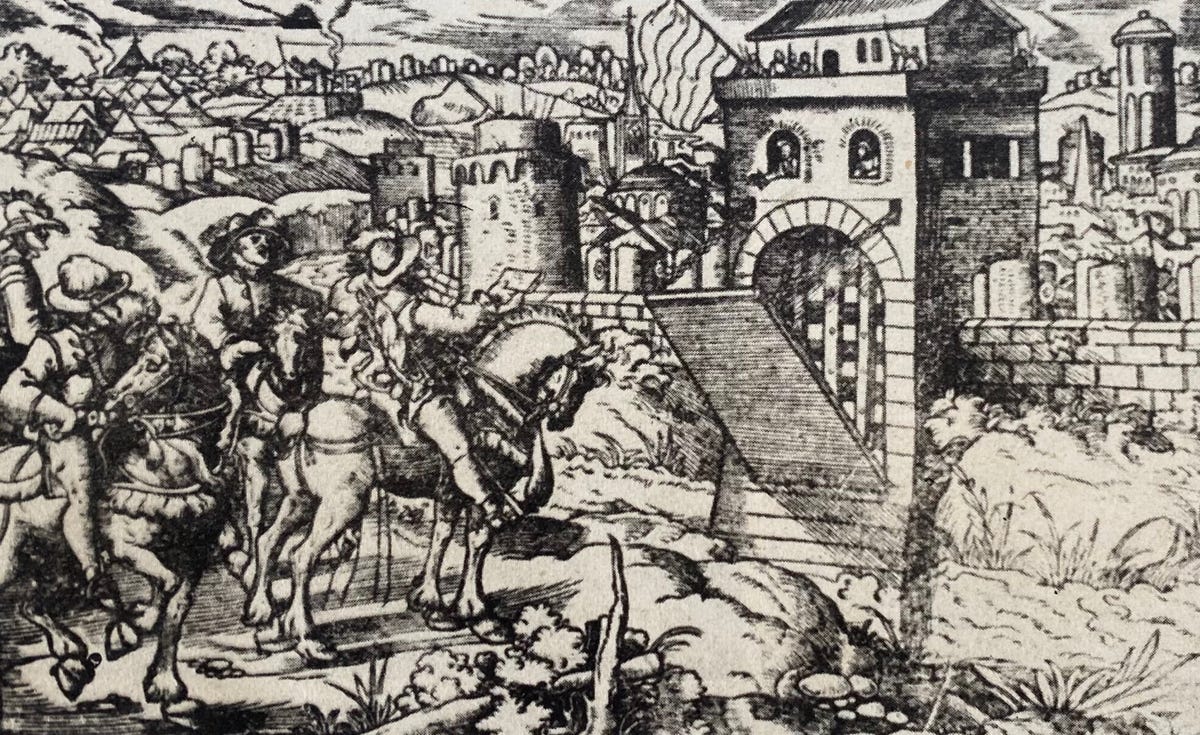
On 28 November 1443, Skenderbeu officially started his rebellion against the Ottoman Empire. He led an army of 300 Albanian Ottoman soldiers into Krujë, hiding them while Skenderbeu’s brother carried on to the castle to deliver a forged letter from the Sultan stating that Skenderbeu was to become the new ruler of the castle. The dethroned leader willingly obeyed this letter, unknowingly leaving the Ottoman guards to die. Skenderbeu marched into the castle with his 300 soldiers, killing every individual Ottoman guard, except for the few who begged for mercy if they fled the city. Skenderbeu showed mercy, but the newly liberated Albanian townspeople did not, as they killed the remaining Ottoman guards as soon as they stepped outside the castle. After the siege was complete, Skenderbeu raised the Albanian flag on Krujë Castle, and reverted to Christianity shortly after.
After 500 years of Ottoman rule, the empire began to collapse in the late nineteenth century. Because of Ottoman desperation to retain power, violence grew against Albanians in an attempt to squash any sort of rebellion or unification within Albania. While Albanians never stopped fighting against the Ottoman Empire during the 500 years of its domination, many more Albanians started to blend with the Empire, especially as influence from other surrounding empires, such as the Serbian Empire, diminished. The Albanian language was infiltrated with Turkish words, and Albanians continued to convert to Islam.
Nonetheless, Albanian rebellions persisted, and the rise of both the Russian and Austro-Hungarian Empires agitated and alarmed the Ottomans further. The Ottoman Empire frantically came up with a plan to squash Albanian nationalism by beginning to erase Albanian identity completely. Although Albanians had been divided into four vilayets during the reign of the Ottoman Empire in order to prevent Albanian unification, there was never a true campaign against Albanian identity until the early twentieth century under the Young Turk Movement. The Young Turks began to use their Muslim and Turkish identities as synonymous and interchangeable, influencing Albanian Muslims to do the same. Religion once again became a political tool for the Ottomans, as “Muslim Albanians were not inclined to be nationalistic for many reasons. In schools, ‘they were reluctant to adopt a script that was not that of the [Qur’an] and ‘they recognized only Turkish as the official state language.’ Additionally, ‘nationalist ideas were condemned…an individual’s Islamic beliefs were considered to be of far greater importance than his feelings of Albanian nationalism.’ By the end of 1908, the Young Turks...were interested in carrying out an Ottoman identity” (Culaj 21).
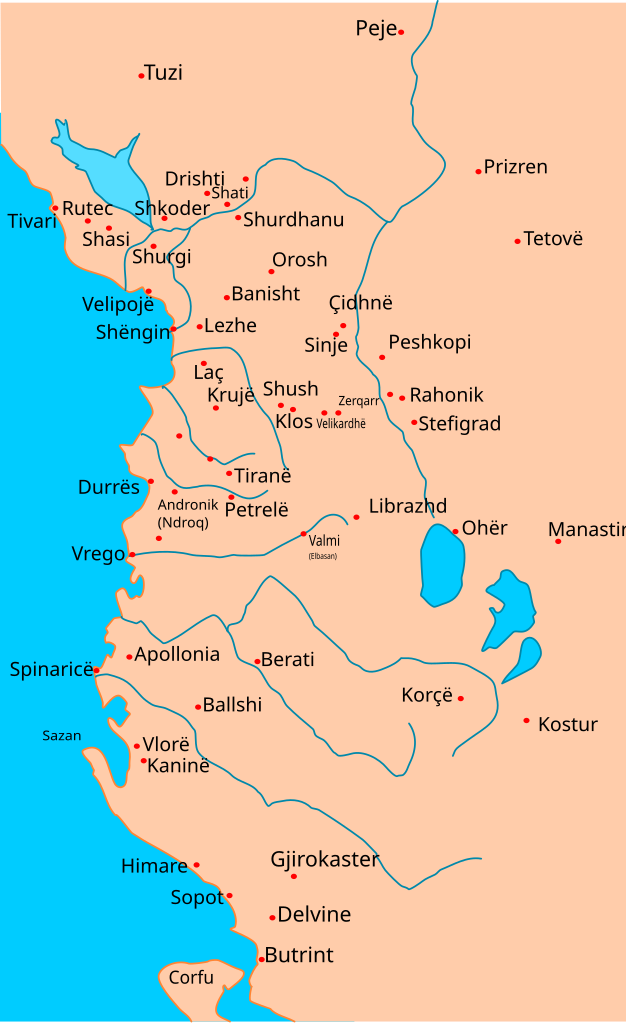
Despite this, Albanian nationalism grew exponentially as a result of Ottomans’ attempt at ethnically cleansing Albanians, with most battles taking place north of Shkoder – in present-day Northern Albania, Kosova, and Montenegro. These rebellions not only plagued the Empire, but showed the surrounding empires of the Ottomans weaknesses. If Albanians were to succeed in gaining independence from the Ottoman Empire, they would need the support of neighboring empires. In November 1912, Ismail Qemali, an Albanian politician who served as the Albanian deputy in the Ottoman Empire, traveled to the Austro-Hungarian Empire to ask for their political support and protection of Albanians as an autonomous people. Upon fortifying this relationship, Qemali returned to Albania for the Congress of Vlorë on 28 November 1912. It was on this day that the Albanian Declaration of Independence was signed, unifying the Albanian people as an autonomous group, and the Albanian flag was raised in Vlorë.
Albanians also celebrate the birthday of Adem Jashari, who was born on 28 November 1955. Jashari was one of the founders of the Kosova Liberation Army, or KLA, (Ushtria Çlirimtare e Kosovës ose UÇK), which led Kosova to freedom from Yugoslavia during the Yugoslavian War of the late 1990s. Jashari is a military hero for Albanians, helping to free Albanians from Slavic rule, having fought Serbian militia until they raided his home in Prekaz, killing Jashari and around fifty other Albanians in the house, on 7 March 1998.
Throughout the years, Albanians have remained united and have preserved their culture with acts of patriotism. It is our language and our traditions that have allowed us to remain as one, despite negative influence from outside forces attempting to divide us. The 28th of November is a day that can and should be celebrated by all Albanians, despite one’s country of origin or religion. It is a fact that the land that Albanians occupy today (Albania, Kosova, and parts of Montenegro, North Macedonia, and Greece) is the land that we have occupied since the beginning. The language our ancestors spoke is the language that we speak today.
No matter one’s skin tone, no matter one’s faith, we are all Albanian. Each and every one of us has a duty to neither self-isolate nor isolate other Albanians. One’s faith does not dictate one’s Albanian-ness. One’s dialect, the amount of Serbian or Turkish words used, does not increase nor decrease one’s patriotism. I am neither more nor less Albanian than other Albanians based on my other characteristics. Our differences serve to make us unique, and that uniqueness should be respected and celebrated. We all come together as Albanians, knowing that our homeland has remained ours despite our enemies attempts to take it away. We will not be ethnically cleansed by those outside of our culture, nor should we as Albanians attempt to cleanse or purify ourselves. There is no one definition of what it means to be Albanian, except that we should love ourselves and one another, looking beyond others’ faith, skin color, and specific ethnic background.